Your cart is empty now.


Elevating Modern Interiors with a Grey Marble Wash Basin
Designing a luxury bathroom requires more than just selecting high-end fixtures; it demands a deep understanding of texture, tone, and geological character. For architects and interior designers working on premium residential projects in the United States, the choice of a centerpiece like a grey marble wash basin can define the entire atmospheric quality of a space. Grey marble offers a sophisticated neutrality that bridges the gap between organic warmth and contemporary minimalism. This versatile stone provides a subtle backdrop that allows other design elements, such as brass hardware or matte black faucets, to command attention without clashing.
The allure of grey tones lies in their ability to adapt to various lighting conditions throughout the day. In a sun-drenched master suite, the subtle veining of a grey marble piece reveals intricate details that evoke a sense of natural luxury. Conversely, in a dimly lit powder room, the stone provides a grounding presence that feels both stable and opulent. When you integrate a marble wash basin into your blueprints, you are not just installing a plumbing fixture; you are introducing a permanent piece of sculptural art. This decision impacts the long-term value and aesthetic prestige of the property.
Selecting the right shade of grey involves analyzing the mineral composition of the specific quarry source. Some marbles lean toward a cool, bluish-grey, which pairs exceptionally well with industrial-style lofts and sleek, monochromatic palettes. Others feature warmer, taupe-like undertones that complement organic textures like reclaimed wood or linen. Understanding these nuances allows designers to manipulate the perceived temperature of a bathroom, creating either a refreshing sanctuary or a cozy retreat. Every vein pattern tells a story of geological time, making each installation unique to the specific project.
Mastering the Aesthetics of Grey Tones in Luxury Bathrooms

Achieving a cohesive design language requires a strategic approach to color layering. A grey marble wash basin serves as the anchor, but the surrounding materials dictate the final mood. To create a high-contrast, dramatic look, pair the grey stone with dark charcoal tiles or deep navy cabinetry. This method emphasizes the lightness of the marble's veins and creates a visually striking focal point. For those pursuing a more serene, spa-like environment, layering various shades of light grey, silver, and white creates a seamless, monochromatic flow that promotes relaxation.
Texture plays a pivotal role in preventing a grey-dominated room from feeling flat or sterile. Consider the interplay between the polished surface of the stone and the tactile nature of matte-finished walls or textured stone tiles. Incorporating metallic accents can further elevate the design. Brushed gold or champagne bronze hardware provides a warm contrast to the cool grey tones, adding a layer of sophisticated luxury. If your design leans toward a more masculine or brutalist aesthetic, matte black fixtures can highlight the rugged, natural beauty of the marble's crystalline structure.
Lighting design must also account for the reflective properties of the stone. Specular highlights on a polished grey surface can create a sense of depth and movement. Using layered lighting—such as recessed ceiling lights, wall sconces, and perhaps even integrated LED strips beneath a wash basin—ensures that the stone's natural patterns remain visible at all hours. Proper illumination prevents the grey from appearing muddy or overly dark, instead allowing the subtle shifts in pigment to shine through clearly.
Integrating Natural Stone into Contemporary Architectural Frameworks
Modern architecture often emphasizes clean lines and a connection to the natural world. Integrating a grey marble wash basin into this framework requires careful consideration of the basin's shape and mounting style. A vessel-style basin, sitting atop a floating vanity, creates a sense of weightlessness and modern elegance. This approach is particularly effective in minimalist designs where the goal is to reduce visual clutter and emphasize the purity of form. The silhouette of the stone becomes the primary architectural statement within the room.
For more traditional or neoclassical projects, a wall-mounted or integrated basin offers a sense of permanence and grandeur. These installations require precise plumbing and structural support, but the result is a seamless integration of stone and architecture. The weight of the marble demands high-quality craftsmanship during the installation phase to ensure stability and longevity. When executed correctly, the basin appears to grow out of the wall itself, blurring the lines between functional utility and structural art.
The choice of surrounding stone for countertops and backsplashes should complement rather than compete with the basin. Using a matching grey marble for the entire vanity area creates a monolithic, high-end look often seen in luxury hotel suites. Alternatively, introducing a contrasting stone, such as a white Carrara or a dark Nero Marquina, can frame the grey basin and draw the eye directly to the sink. This technique of "framing" is a powerful tool in an interior designer's arsenal for directing the occupant's visual journey through the space.
Technical Considerations and Maintenance for Long-Term Beauty
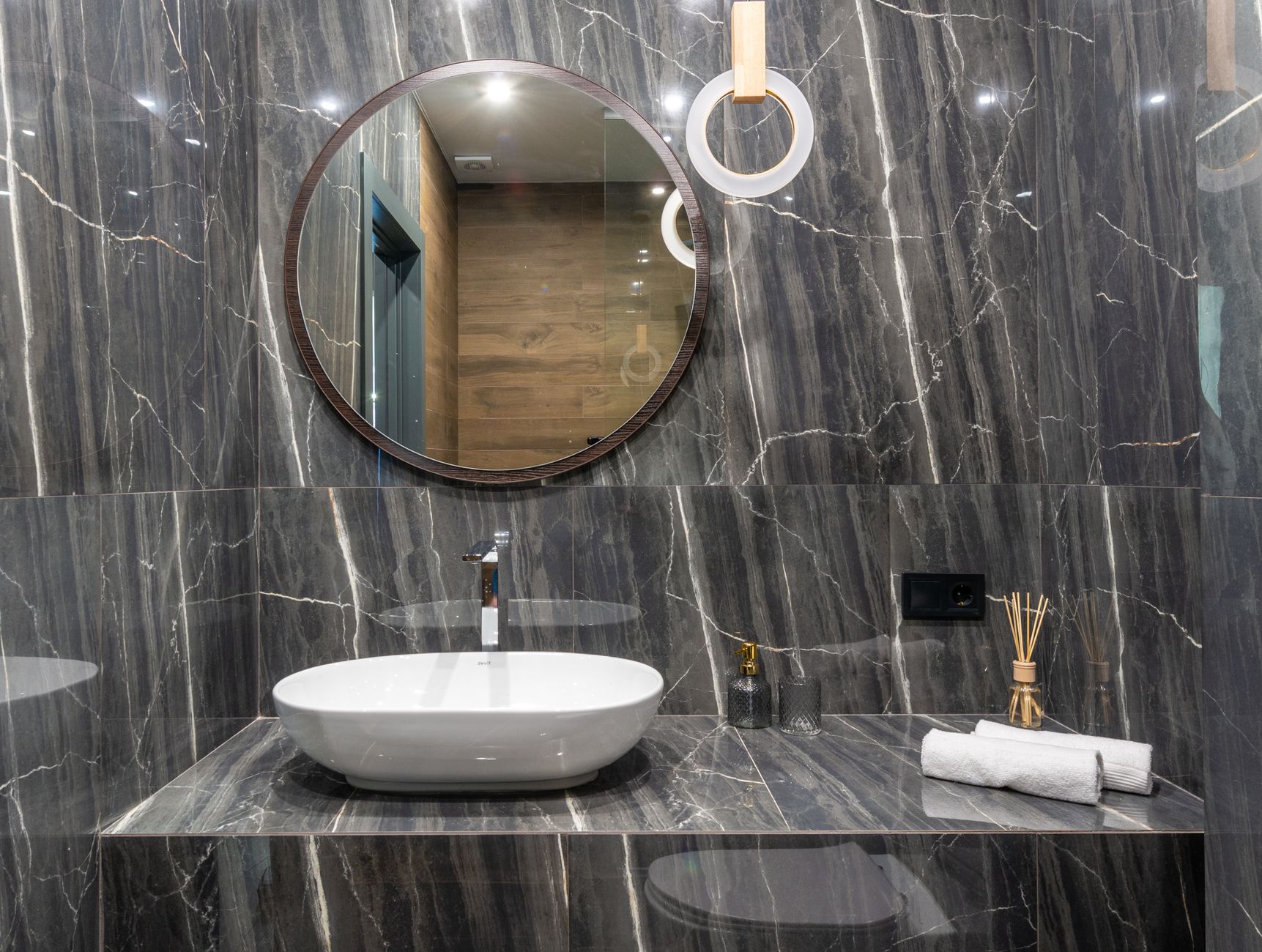
While the visual impact of grey marble is undeniable, professionals must address the practicalities of stone care. Marble is a metamorphic rock, meaning it is naturally porous and susceptible to etching from acidic substances. In a high-use bathroom environment, the presence of soaps, lotions, and even certain cleaning agents can dull the polished finish over time. To preserve the integrity of the surface, it is essential to apply a high-quality, penetrating sealer during the initial installation. This creates a protective barrier that prevents liquids from penetrating deep into the stone's pores.
Maintenance routines should prioritize pH-neutral cleaners specifically formulated for natural stone. Avoiding harsh, acidic, or abrasive chemicals is the most important step in preventing permanent damage to the basin. For designers and homeowners alike, educating the end-user on these simple care protocols is vital for maintaining the luxury aesthetic. A well-maintained marble basin can remain a stunning centerpiece for decades, often becoming a cherished heirloom within the home. Regular dusting and occasional buffing with a soft cloth can help maintain that signature luster.
Furthermore, the structural integrity of the installation must be verified by a qualified professional. Because marble is significantly heavier than ceramic or porcelain, the vanity unit and wall supports must be engineered to handle the specific load. This is particularly true for wall-mounted configurations where the weight of the stone is cantilevered. For more information on the physical properties and durability of various stones, consulting resources like the Geological Society of America can provide valuable technical insights into how different mineral compositions react to environmental stressors.
Selecting the Right Marble Source for Your Project
The origin of the stone significantly influences both its aesthetic character and its availability. When sourcing a grey marble wash basin, look for quarries that provide consistent color grading and vein density. Some regions are famous for specific grey marbles, such as the soft, clouded patterns of Bardiglio or the more structured, linear veins of certain Italian varieties. As an architect, knowing the specific quarry can help you predict the final look and ensure that the stone matches your overall material palette for the entire project.
Quality control should be a priority during the procurement process. Inspecting large slabs or individual basins for micro-fissures, uneven thickness, or excessive pitting is essential. High-end projects demand perfection, and even small imperfections can become magnified under bright bathroom lighting. Working with suppliers who specialize in premium natural stone ensures that you receive pieces that have undergone rigorous selection. This attention to detail is what separates a standard renovation from a true luxury installation.
Finally, consider the environmental and ethical implications of your sourcing. In the modern era, many clients value transparency regarding the extraction and processing of natural materials. Sourcing from quarries that adhere to sustainable practices and fair labor standards adds another layer of value to your design. By choosing a grey marble wash basin that is both beautiful and responsibly sourced, you create a space that reflects a commitment to both exquisite taste and global responsibility.
Share:
Recent Posts


